As we move into 2026, the front door is no longer just a threshold but the centerpiece of a home’s architectural narrative. Homeowners are increasingly moving away from the “safe” builder-grade aesthetics of the past decade, opting instead for grand entrances that combine artistic expression with cutting-edge technology. This shift is driven by a desire for “quiet luxury,” where the quality of materials and the subtlety of design speak louder than flashy ornamentation. We are seeing a major rise in oversized pivot doors, sustainable fiberglass composites, and deeply saturated color palettes that reflect a more confident approach to curb appeal. Because modern living demands a seamless blend of indoor comfort and outdoor accessibility, according to phantom screens long island, ny many designers are now integrating high-end screening solutions that protect the home’s interior without compromising the visual impact of a statement door. This focus on “total-entryway” design ensures that the front of the house is as functional as it is beautiful, setting a sophisticated tone for everything that lies within.
The Era of the Monumental Entrance and Material Fusion
The physical scale of the front door is reaching new heights, literally, as eight-foot and even ten-foot doors become the standard for custom builds and high-end renovations. These monumental entrances often utilize pivot hinges rather than traditional side hinges, allowing for massive, heavy slabs to swing with a weightless, dramatic grace that immediately signals a luxury environment.
The trend isn’t just about size, however; it is about the “fusion” of contrasting materials to create visual depth. We are seeing a move away from single-material doors in favor of hybrid designs that layer natural wood with industrial metals like bronze or recycled aluminum. This approach allows a home to feel both organic and contemporary at the same time. If you are planning a more significant property overhaul, such as adding a secondary dwelling or a guest suite that requires its own distinct entrance, http://www.remodelworks.com/ offers the specialized contracting services needed to ensure these additions match the sophisticated architectural standards of 2026. By treating every entryway on a property with the same level of design scrutiny, homeowners can create a cohesive estate-like feel that significantly boosts both market value and personal pride in their living space.
The 2026 Color Palette: Nature, Mood, and Saturated Sophistication
Color trends are moving toward “moody” and “grounded” hues that evoke a sense of permanence and emotional calm. The era of the bright, high-contrast white farmhouse door is being replaced by a more nuanced selection of tones that pull directly from the surrounding environment.
Deep, Garden-Inspired Greens
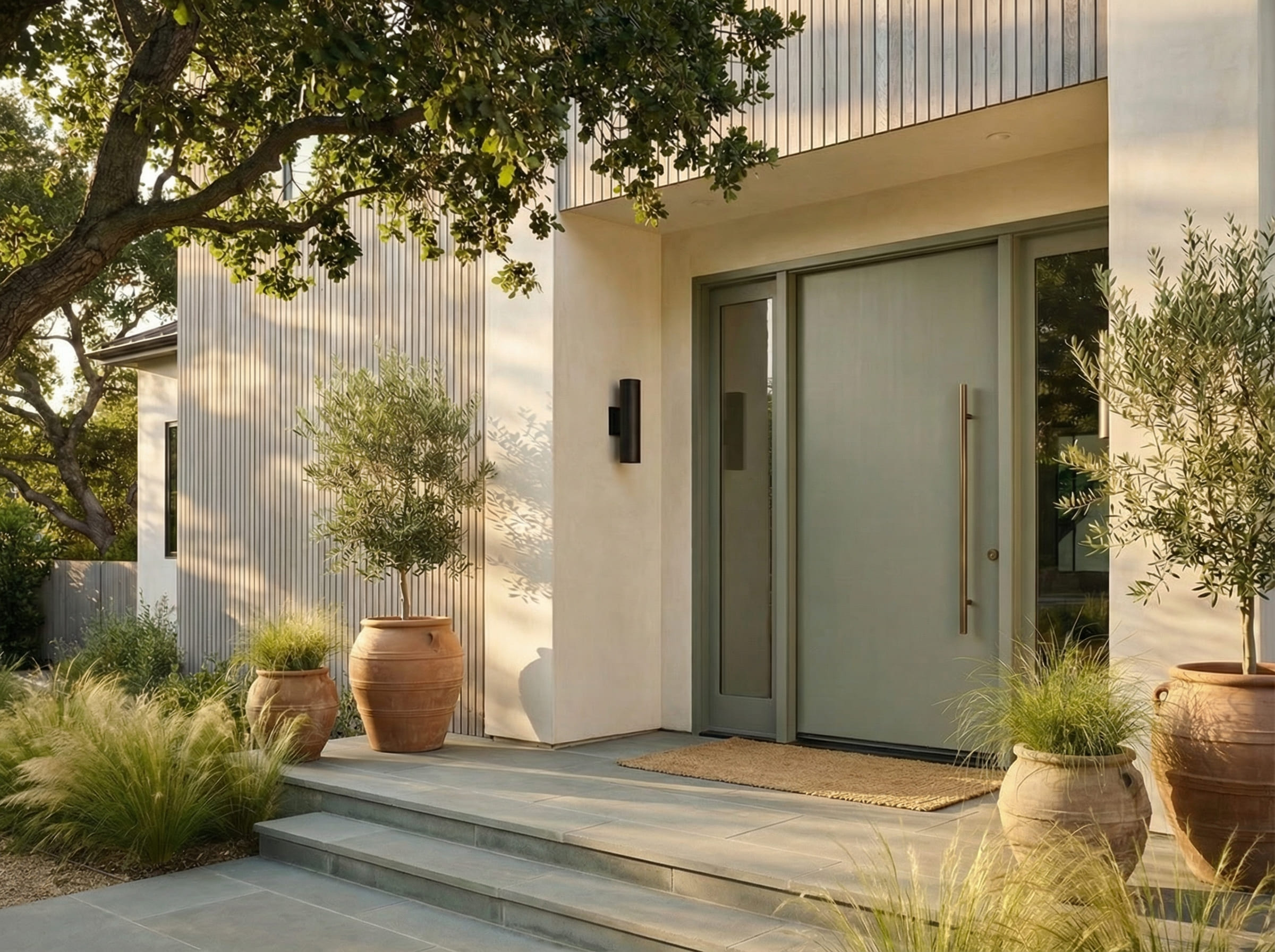
Green remains a dominant force in 2026, but the shades have evolved into deeper, more mossy and forest-inspired tones. These colors are intended to make the house feel like it belongs to its landscape, creating a harmonious transition from the garden to the foyer. Darker eucalyptus and sage are particularly popular because they act as “living neutrals”, colors that provide a pop of interest while remaining sophisticated enough to pair with almost any exterior stone or siding.
The New Neutrals: Warm Browns and Charcoals
We are witnessing a significant departure from cool grays, with “warmth” becoming the defining keyword for neutral palettes. Earthy browns, rich chocolates, and charcoal blacks with warm undertones are the go-to choices for those seeking a modern yet inviting look. These shades are often paired with matte or low-sheen finishes, which emphasize the texture of the door rather than reflecting light. This matte aesthetic is key to achieving the “quiet luxury” look that defines the current design cycle.
Aubergine and Midnight Blues
Deep aubergine and midnight blues are trending as alternatives to standard black. These colors offer a regal, almost historical feel but appear strikingly modern when applied to a door with clean, minimalist lines. These hues change character throughout the day as the sunlight shifts, providing a dynamic visual experience that keeps the home’s facade looking fresh and interesting.
Hardware as Functional Art: Texture and Minimalism
The hardware choices are split between two fascinating extremes: “invisible” technology and oversized, tactile “statement” pieces that serve as the door’s jewelry. Designers are increasingly using hardware to add a handmade, artisanal quality to even the most modern, factory-finished doors.
One of the standout trends is the “unlacquered brass” movement, where hardware is allowed to oxidize and develop a unique patina over time. This “living finish” reflects a broader trend toward honesty in materials, where imperfections are celebrated as signs of quality and use. At the same time, we are seeing the rise of “textured” hardware, knurled, hammered, or ribbed handles that provide a satisfying tactile experience every time the door is opened. For those who prefer a more streamlined look, concealed hinges and integrated smart locks that are hidden within the door frame itself are becoming the gold standard. These “ghost” features allow the beauty of the wood grain or the richness of the paint color to take center stage without being interrupted by bulky mechanical components.
Glass and Light: Balancing Transparency with Privacy
Natural light remains a top priority for entryways, but the way we incorporate glass has become much more sophisticated to address growing concerns over privacy and energy efficiency. Homeowners are no longer satisfied with simple, clear panes; they want glass that serves a decorative and functional purpose.
Textured glass styles, such as reeded, frosted, and smoked glass, are seeing a massive resurgence. Reeded glass, in particular, is a favorite because its vertical lines mimic the architectural geometry often found in modern door panels. It allows a flood of natural light to enter the home while distorting the view from the street, providing a sense of security without the need for heavy window treatments. This ensures that even a door with large glass insets can maintain a high R-value, keeping the home comfortable in extreme temperatures while reducing noise pollution from the outside world.
Sustainability and “Firescaping” at the Threshold
Fiberglass and high-durability composites are leading the way because of their incredible longevity and resistance to warping. Unlike traditional wood, which requires frequent refinishing, these modern materials can mimic the look of natural grain while lasting for decades with minimal maintenance. Furthermore, the concept of “firescaping” is fundamentally changing the look of the modern entryway. To mitigate fire risks, designers are creating “Zone 0” barriers, a five-foot perimeter around the door made of non-combustible materials like decorative stone, gravel, and metal planters. This creates a clean, architectural look, blending safety with a minimalist, high-end aesthetic that highlights the front door as the ultimate focal point of the property.